

Re:Connect Within
Scenario-based e-learning · Higher education
A calm, reflective learning experience supporting international graduate students as they navigate academic stress, inner dialogue, and belonging.
Project Overview
Role | Sole Learning Experience Designer & Developer
Duration | 10-month independent capstone
Program | York University Certificate in Learning Experience Design
Tools | Rise 360 · Storyline 360 · FigJam
Evaluation | Pilot testing with three target learners
Academic difficulty is not always an information problem.
The Learning Need
International graduate students studying in a second language may experience invisible cognitive and emotional demands alongside their academic workload. Language-related pressure, emotional overload, and critical inner dialogue can make learning feel heavier.
Re:Connect Within was designed as a gentle space where learners could recognize these internal responses, reduce self-blame, and reconnect with learning in a more balanced way.
Rather than delivering remedial or performance-based instruction, the experience prioritized emotional safety, low cognitive load, accessible language, and self-paced engagement.
Translating an invisible experience into something learners could recognize and navigate.
Design Approach
I translated this insight into three design principles:
Predictable navigation, concise language, intentional pacing, and a primarily linear structure reduce decision fatigue and help learners focus on reflection.
Reduce unnecessary cognitive load
Make internal experiences visible
Character-based “inner voices” externalize common patterns of self-talk, helping learners recognize difficult internal responses without defining them as personal shortcomings.
Optional interactions, reflective prompts, and scenarios without right or wrong answers allow learners to engage at their own pace and interpret the experience through their own context.
Protect learner agency
-
![]()
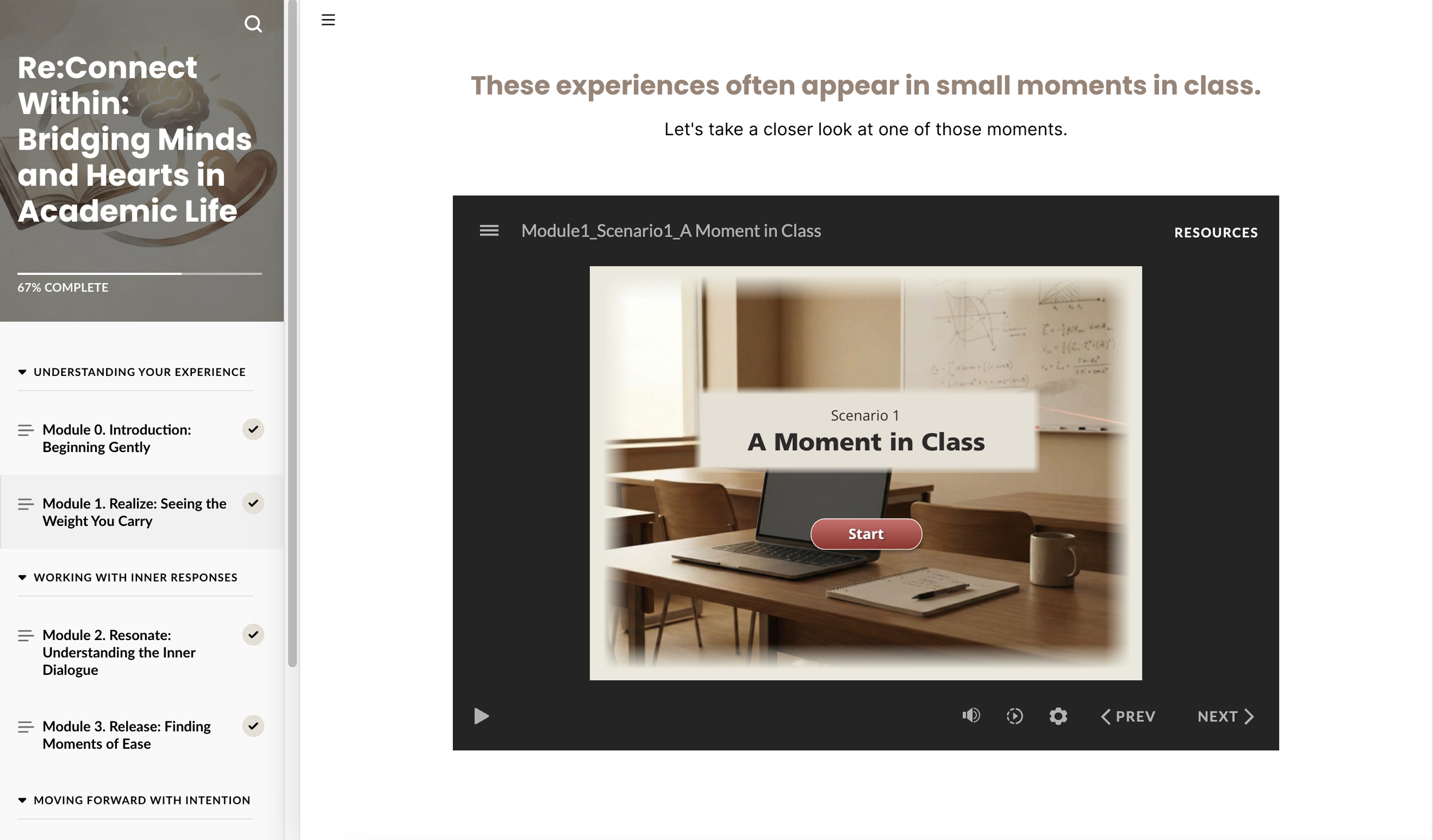
A Moment in Class
The Storyline scenario situates reflection within a familiar academic moment, allowing learners to explore different responses without being judged as right or wrong.
-
![]()
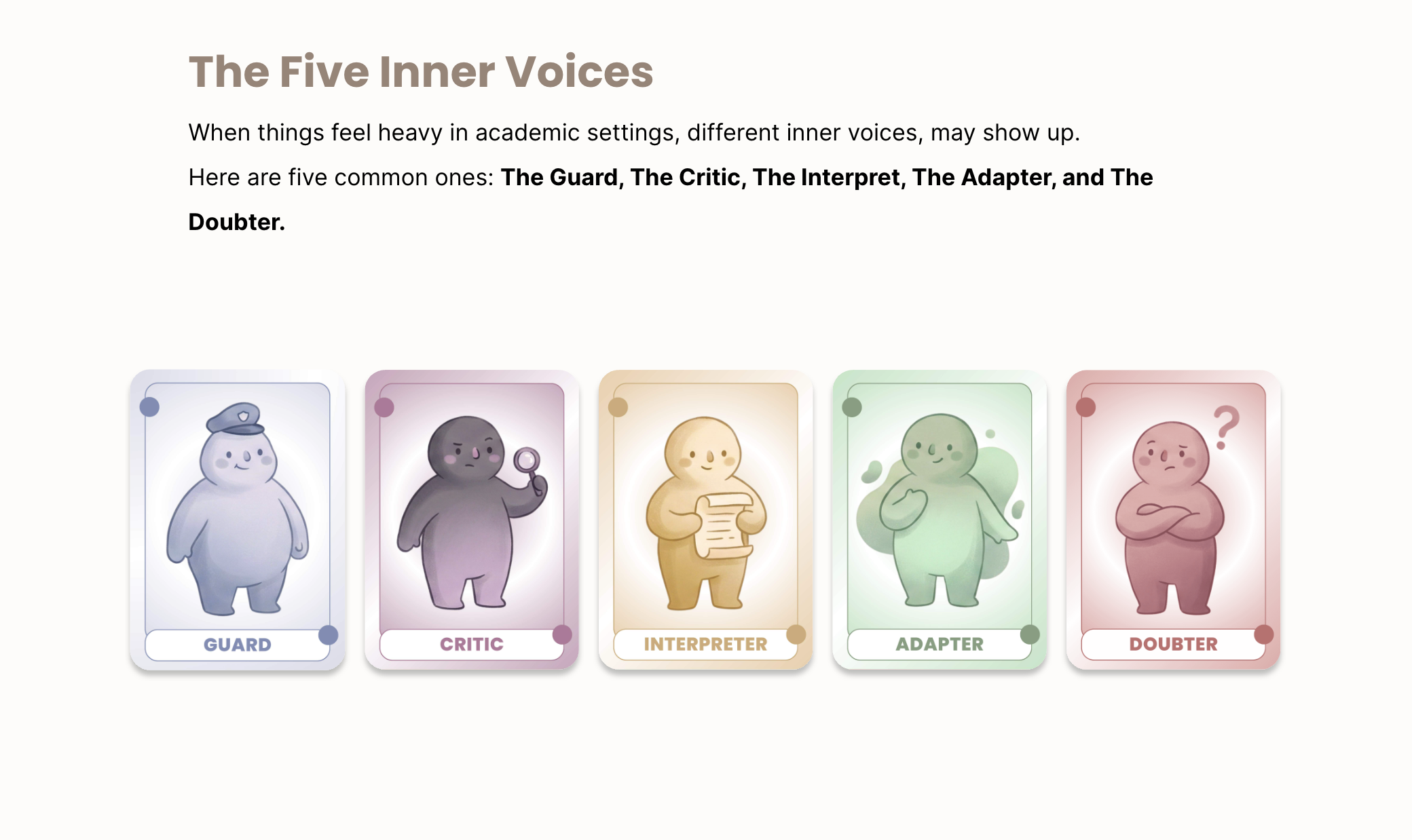
The Five Inner Voices
The Five Inner Voices externalize common patterns of self-talk, making an abstract emotional experience easier to recognize and discuss.
-
![]()
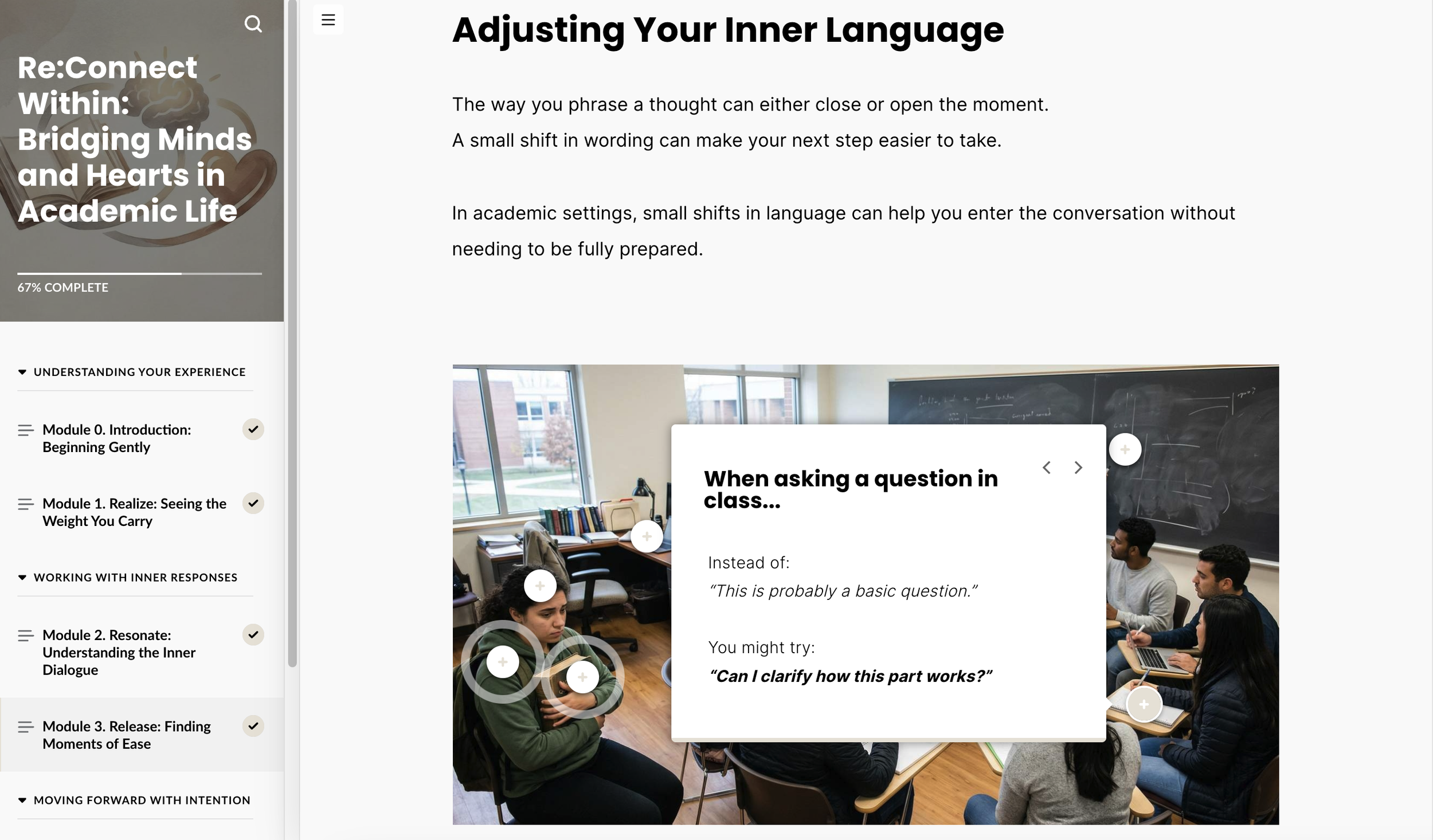
Adjusting Your Inner Language
Interactive reframing examples translate self-critical thoughts into more supportive language learners can apply in academic situations.
Intended Learning Outcomes
The experience was designed to help learners:
Recognize common cognitive and emotional responses associated with studying in a second language
Reframe academic difficulty as cognitive load rather than a lack of ability
Notice their internal dialogue with greater awareness and less judgement
Develop greater emotional readiness to continue engaging with learning
Rather than using correctness-based assessment, the experience treated awareness, reflection, and self-understanding as foundational outcomes.
Recognition before resolution.
Learning Strategy
Articulate Rise 360 provided a primarily linear path that reduced decision fatigue while preserving learner control through optional interactions.
Embedded Storyline 360 scenarios placed reflection within relatable academic moments. Rather than directing learners toward a correct response, each scenario presented familiar coping strategies followed by non-evaluative feedback.
The Five Inner Voices made patterns of self-talk easier to recognize, while the Reconnection Mosaic extended individual reflection into a shared FigJam space.
The Learning Journey
-
Introduces the tone, expectations, and rhythm of the experience.
-
Helps learners recognize the cognitive and emotional demands of academic life.
-
Introduces the Five Inner Voices and common patterns of self-talk.
-
Invites learners to identify moments of relief, awareness, and reconnection.
-
Extends individual reflection into a shared visual space.
Building a consistent experience across multiple tools.
Prototype Development
Developed independently over ten months, the pilot-ready prototype included the course introduction and Modules 0–3. Two additional modules were scoped for future development.
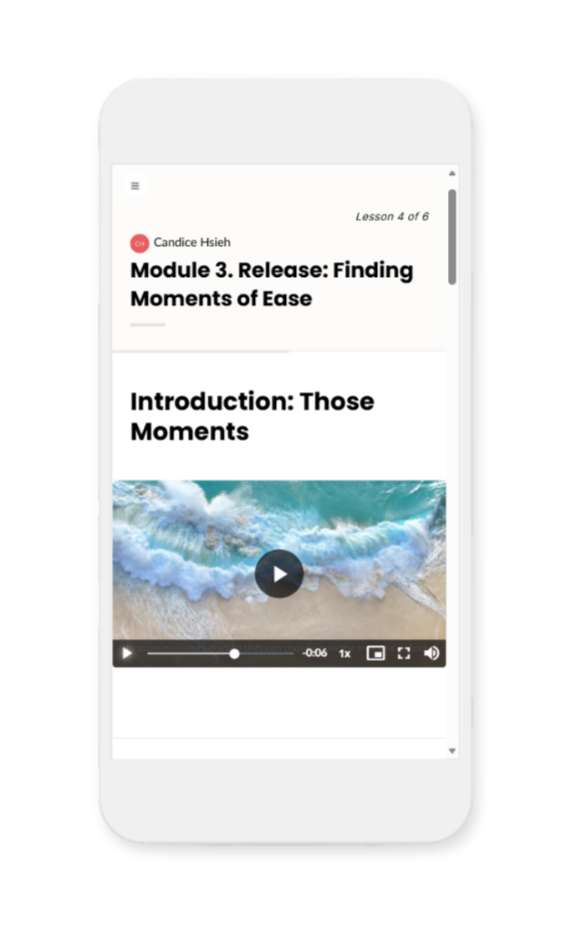
Articulate Rise 360 — Course Structure
Articulate Storyline 360 — Scenario-Based Interaction
FigJam — Collaborative Reflection
Testing emotional safety and instructional clarity.
Pilot Testing
Three international graduate students tested the prototype through facilitated and self-directed sessions.
The evaluation focused on the overall experience, learnability, navigation, emotional tone, and the Reconnection Mosaic. Participants completed the experience without major technical barriers.
What Worked
Calm, safe, and emotionally engaging
Participants described the experience as “calming,” “grounding,” “gentle,” and “welcoming.” The visual consistency, reflective tone, and non-evaluative interactions supported the intended sense of emotional safety.
Where Clarity Softened
Open reflection needed light scaffolding
While one participant found the open-ended prompts intuitive, two needed clearer expectations about how to begin and how much to write.
“I liked the openness, but sometimes I paused because I didn’t know how to start my response.”
— Pilot participant
Navigation was generally clear, although some transitions felt abrupt and the purpose of the Reconnection Mosaic was not consistently understood.
Key Insight
Clarity decreased when learners were asked to take more initiative. The design therefore needed to preserve emotional openness while providing enough structure for learners to respond and move forward confidently.
Preserve openness while adding just enough structure.
Next Iteration
The next iteration would add light scaffolding to reflection prompts, strengthen transitions between sections, and clarify the purpose of the Reconnection Mosaic.
The design challenge is not to remove ambiguity entirely, but to balance emotional openness with enough structure for learners to feel confident taking the next step.
Reflection
“This project has been a process of learning how to design not only for understanding, but for feeling.”
Developing Re:Connect Within made me more attentive to how small design decisions shape learners’ experiences of clarity, safety, and engagement.
The pilot demonstrated that the prototype could create a calm and emotionally supportive space while also revealing where reflective freedom needed stronger guidance. It reinforced for me that learner-centred design is not only about making information understandable, it is also about creating conditions in which learners feel ready and able to engage.
© 2026 Candice Hsieh